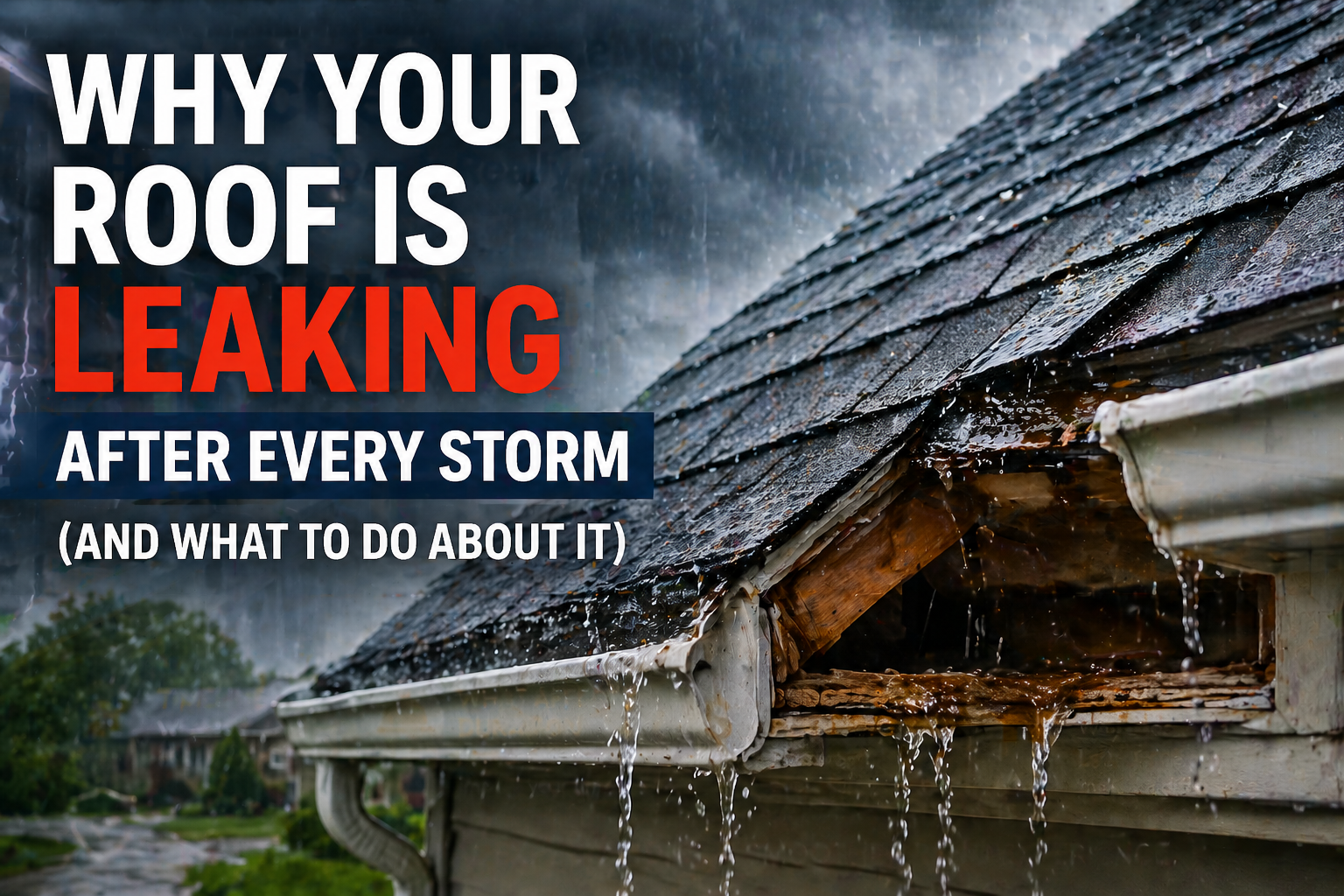
When storms roll through Sudbury, the last thing you want to worry about is a leaking roof. Yet, many homeowners find themselves facing the frustrating problem of leaks every time a storm hits. Whether it’s a gentle rain or a heavy snowstorm, if your roof leaks repeatedly, it’s time to understand why this keeps happening and what you can do about it.
In this blog, we’ll break down the top reasons your roof is leaking after storms and provide actionable steps you can take to prevent further damage. Let’s dive into why this problem happens—and how Just Roofing Sudbury can help you get your roof in top condition.
Common Causes of Roof Leaks After Storms
Storms often bring severe weather, from heavy rain and strong winds to snow and ice. Each of these elements can cause wear and tear on your roof, leading to leaks. Here are the common causes that might explain why your roof is leaking every time a storm hits:
1. Damaged or Missing Shingles
Shingles are the first line of defense for your roof. If they’re damaged or missing, water can easily seep through, especially during a storm. Shingles can become cracked, curled, or completely torn off due to:
- Strong winds: High winds can lift shingles, leaving the underlying layers exposed to the elements.
- Age of the roof: Older roofs are more susceptible to shingle damage.
- Improper installation: Shingles that weren’t properly installed can easily get damaged over time.
How It Causes Leaks: Once shingles are damaged or missing, the roofing material underneath is exposed, allowing water to infiltrate the attic or ceiling.
2. Clogged Gutters and Downspouts
Gutters are essential for guiding water off your roof and preventing water buildup. However, if your gutters are clogged with leaves, debris, or ice, water can overflow and damage your roof.
How It Causes Leaks: When gutters are clogged, water can’t flow properly, which means it might pool on your roof. This pooling can create spots where water can seep under shingles or even cause ice dams, which lead to leaks when the ice melts.
3. Faulty Flashing
Flashing is the metal material installed around roof features such as chimneys, vents, and skylights to prevent water from entering the gaps. Over time, flashing can deteriorate due to weather exposure, rust, or poor installation.
How It Causes Leaks: When flashing is damaged, water can seep into the vulnerable areas around chimneys, vents, and other roof penetrations. This allows moisture to enter the home, causing leaks during or after a storm.
4. Roof Valleys
Roof valleys are the areas where two roof planes meet and create a channel for water to flow down. Valleys are critical in directing water off your roof, but they can also be a weak spot.
How It Causes Leaks: If the valley isn’t properly sealed or has damaged shingles, water can easily slip through. With a storm’s heavy rain or snow, these areas can become a significant source of leaks.
5. Ice Dams
Winter storms can bring ice and snow, which, if not managed correctly, can create ice dams. Ice dams occur when melting snow refreezes at the roof edge, blocking proper water drainage.
How It Causes Leaks: The water trapped behind the ice dam can back up under shingles and cause leaks, particularly along the eaves or near gutters.
6. Worn-out Roofing Materials
Roofing materials naturally degrade over time. Even with proper care, a roof will begin to show signs of aging. If your roof is 15–20 years old or more, it might be reaching the end of its lifespan.
How It Causes Leaks: Worn-out roofing materials can crack, lose granules, and fail to provide adequate protection from the elements, allowing water to seep through.
What You Can Do About It
If your roof is leaking after every storm, it’s time to take action. Here’s what you can do to prevent further leaks and protect your home.
1. Schedule a Professional Roof Inspection
The first step in addressing a leaking roof is to schedule a professional roof inspection. While DIY inspections can help you spot obvious issues, a trained roofing contractor will thoroughly examine your roof for hidden damage, including checking for cracked shingles, weak flashing, and any water damage inside your attic.
Why It Helps: Professional inspections identify issues before they become major problems. This early detection can save you thousands in repairs.
2. Repair or Replace Damaged Shingles
If your shingles are cracked, curled, or missing, it’s essential to have them repaired or replaced. Damaged shingles allow water to enter your roof, and ignoring this can lead to more severe problems, such as wood rot or mold growth inside your home.
Why It Helps: Repairing or replacing damaged shingles restores your roof’s protective layer, preventing water from getting through.
3. Clean and Maintain Your Gutters
Clogged gutters are a leading cause of roof leaks, so regular gutter cleaning is critical. It’s especially important before and after stormy seasons. Clear gutters allow water to flow away from your roof properly, preventing water from pooling.
Why It Helps: Clean gutters prevent the buildup of debris and ice, reducing the chances of water backup or overflow that can damage your roof.
4. Replace Faulty Flashing
If your flashing is damaged or worn out, it’s crucial to replace it. Flashing is essential for sealing roof penetrations, such as chimneys, vents, and skylights, so they don’t let water in.
Why It Helps: Proper flashing prevents water from entering your roof around vulnerable areas, keeping your home dry during storms.
5. Ensure Proper Roof Ventilation
Poor roof ventilation can cause ice dams, especially in cold weather. Make sure your attic is properly ventilated to allow warm air to escape, preventing snow from melting and refreezing on your roof.
Why It Helps: Proper ventilation reduces the chances of ice dams and helps regulate your roof’s temperature, preventing moisture buildup.
6. Consider a Roof Replacement
If your roof is old or showing significant signs of wear, it might be time to consider a full roof replacement. A new roof will provide better protection, be more energy-efficient, and last much longer than an aging roof.
Why It Helps: A new roof is a long-term solution to preventing leaks, especially in areas with harsh weather conditions like Sudbury.
Why Choose Just Roofing Sudbury?
At Just Roofing Sudbury, we specialize in roofing repairs, inspections, and replacements in Sudbury and surrounding areas. Our experienced team offers:
- Comprehensive Roof Inspections
- High-Quality Roof Repairs
- Roof Replacements
- Emergency Services
We understand the challenges that homeowners face when dealing with roof leaks, especially during stormy weather. Our team is committed to providing timely, reliable solutions to ensure your roof stays in excellent condition.
Get Your Roof Inspected Today
Don’t wait until the next storm hits to deal with a leaky roof. If you’re tired of dealing with leaks, contact Just Roofing Sudbury for a professional inspection and repair. We’ll help you identify and fix the problem quickly, so you can enjoy peace of mind during every storm.
Call us today to schedule your roof inspection!
Final Thoughts
Roof leaks are a major concern for homeowners in Sudbury, especially after every storm. By understanding the common causes and taking preventive action, you can keep your roof in top shape and protect your home from water damage. Whether it’s repairing damaged shingles, cleaning gutters, or replacing faulty flashing, Just Roofing Sudbury is here to provide expert solutions to keep your roof in excellent condition.
Let us help you stop the leaks before they cause further damage. Contact us now and get your roof inspected by the experts!